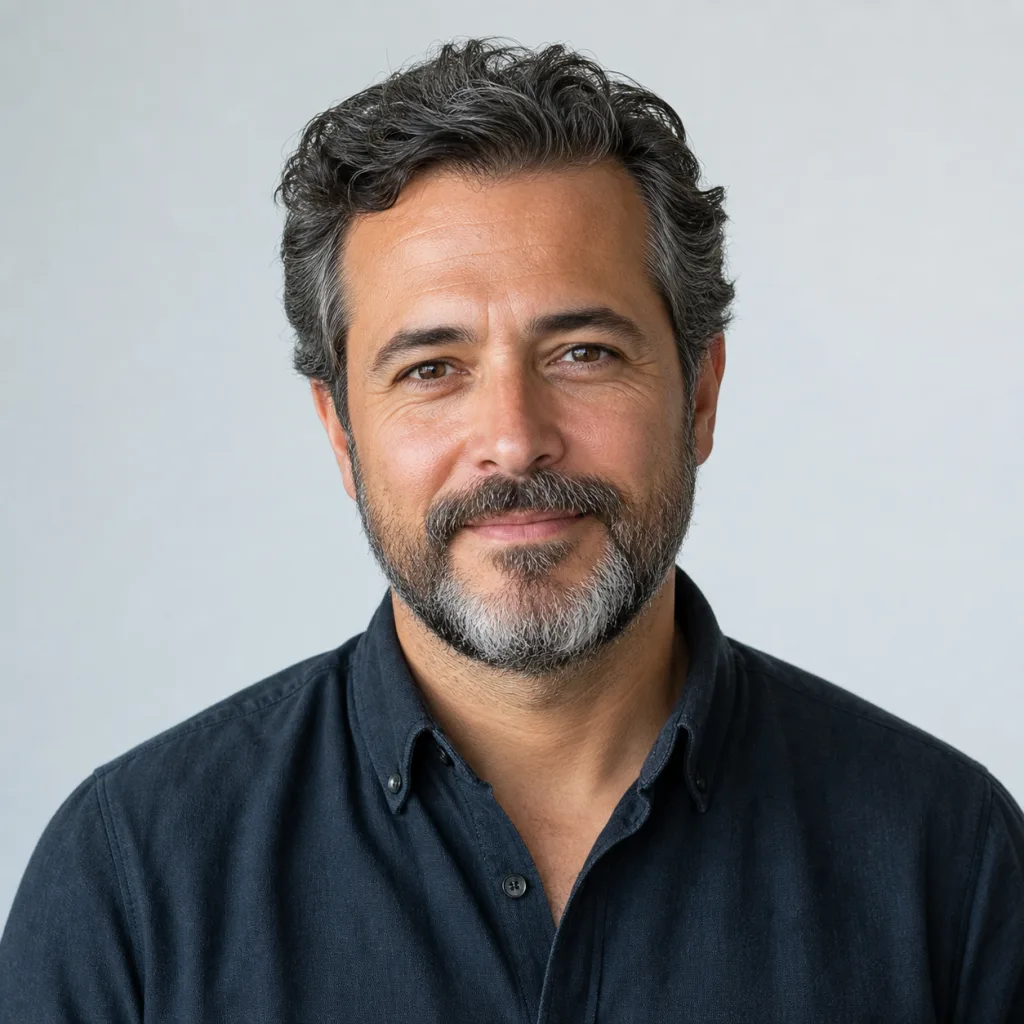
Omar examines what products are made from, how they can be repaired, and which environmental claims are supported rather than merely familiar or attractive.
He treats procurement as a chain of decisions about need, durability, maintenance, labor, transport, packaging, and end of life. Omar prefers fewer clear claims to a page of vague virtues. When evidence is incomplete, he names the gap instead of reaching for a reassuring label.
Education
Omar holds an MSc in industrial ecology from TU Delft and a BEng in mechanical engineering from the American University of Beirut. His training covered material flows, lifecycle assessment, manufacturing, design for maintenance, and the assumptions that can change the result of a product comparison.
Experience
His fictional experience includes lifecycle review, repairability, and merchandise claims. He has compared components, challenged single-number assessments, written supplier questions, and designed spare-part expectations. He knows that recycled content does not answer every impact question and that a durable product only helps if it is needed and kept in use.
Current focus
His current focus is a modest catalog whose purpose and limits are plain. He reviews material descriptions, replaceable parts, care instructions, stock choices, and packaging. He also makes sure no product is called neutral, impact-free, certified, donated, or traceable without evidence that could support the exact claim.
Beyond work
Omar mends his own clothes and cooks team lunches in quantities that exceed the original plan. He enjoys a repair that remains visible because it records use rather than pretending an object is new. His toolbox and spice cupboard are both arranged by frequency of need.