


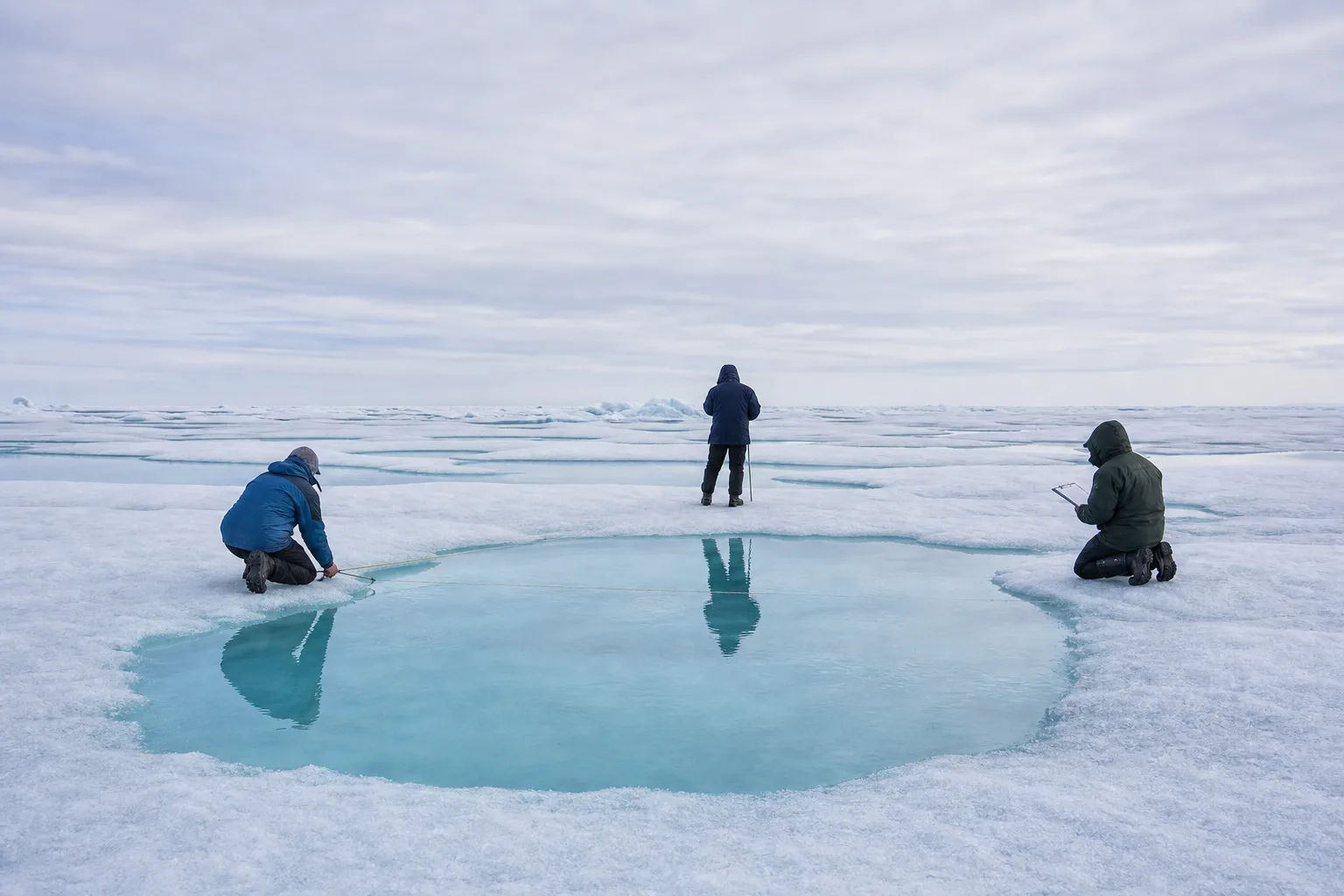
Research in the Arctic is not only a question of where instruments can be placed. It is a question of authority, consent, benefit, data control, capacity, and the priorities of people whose homelands and livelihoods are too often treated as a distant field site. A responsible project begins with governance rather than adding consultation after the method is fixed.
Who decides the question
A research question shapes the data collected, the budget, the people asked to contribute, and the conclusions considered relevant. If a project arrives with those decisions already made, a workshop cannot create shared authority. Early conversations need a real option to change scope, method, timing, access, or whether work proceeds at all.
The Inuit Tapiriit Kanatami National Inuit Strategy on Research sets out priorities including advancing Inuit governance in research, enhancing ethical conduct, aligning funding with Inuit priorities, ensuring Inuit access and ownership over data, and building capacity. This fictional programme uses that strategy as primary governance context. It does not claim to represent Inuit communities or substitute a generic checklist for local decisions.
Consent continues after a signature
Consent applies across field activity, interviews, images, samples, repositories, publications, and later reuse. People need to know what is being collected, who can access it, how long it will be kept, and how to raise a concern. A change in method or future use may require a new decision. Sensitive locations, knowledge, and personal information may need restricted access or no collection at all.
Compensation and capacity belong in the plan. Local expertise is work, not free context. Budgets should account for preparation, translation, review, governance, training, equipment, and the administrative labor of partnership. A project that funds travel and instruments but not shared decision-making has encoded its priorities before anyone reaches the field.
Data have relationships
Open data can support learning and accountability, but open is not automatically responsible. Some records may reveal culturally sensitive knowledge, personal information, or locations vulnerable to disturbance. Governance agreements can distinguish public data, shared data, restricted data, and knowledge that should not be recorded. Metadata should identify authority and conditions of reuse, not only technical fields.
Authorship and review also matter. Acknowledgment is not equivalent to authority or intellectual contribution. Agreements should state how findings will be checked, how disagreement will be represented, and who can approve descriptions of people, places, or knowledge. A publication deadline does not erase those commitments.
Questions before fieldwork
- Who identified the need and who has authority to change or decline the project?
- Which local priorities, laws, and governance structures shape the work?
- What labor, capacity, and review are funded?
- Who owns, stores, accesses, and decides future uses of data and samples?
- How can consent be revised, and what happens when partners disagree?
- What remains after the visiting team and grant have ended?
These questions do not guarantee a responsible relationship. They make omissions harder to hide. Any real work would require place-specific agreements and authority. See Sources and methods for the full governance source and the limits of this fictional demonstration.
Accountability continues when results are released. Partners need accessible copies, time to review interpretation, and a route to correct errors. A public archive should not become the first place someone learns how their contribution was framed. Closing a project well includes returning materials, documenting outstanding obligations, and confirming who remains responsible for future requests.
Observation can begin locally
Community-led monitoring may connect daily travel, harvesting, weather, water, wildlife, and safety observations across long periods. Its value does not depend on being converted into an external project’s categories. Collaboration should begin by asking what record already exists, how it is governed, and whether a new instrument or dataset serves a locally defined purpose.
Translation also means more than changing words between languages. Concepts, place names, seasonal knowledge, and authority may not map cleanly onto a visiting institution’s forms. Time and budget for interpretation, review, and correction are part of the research method, not communication added after analysis.
A partnership can also decide that some results should remain local, be summarized without sensitive detail, or not be recorded. That outcome is not missing data. It is a governance decision whose terms should be respected in repositories, search indexes, images, and later requests.