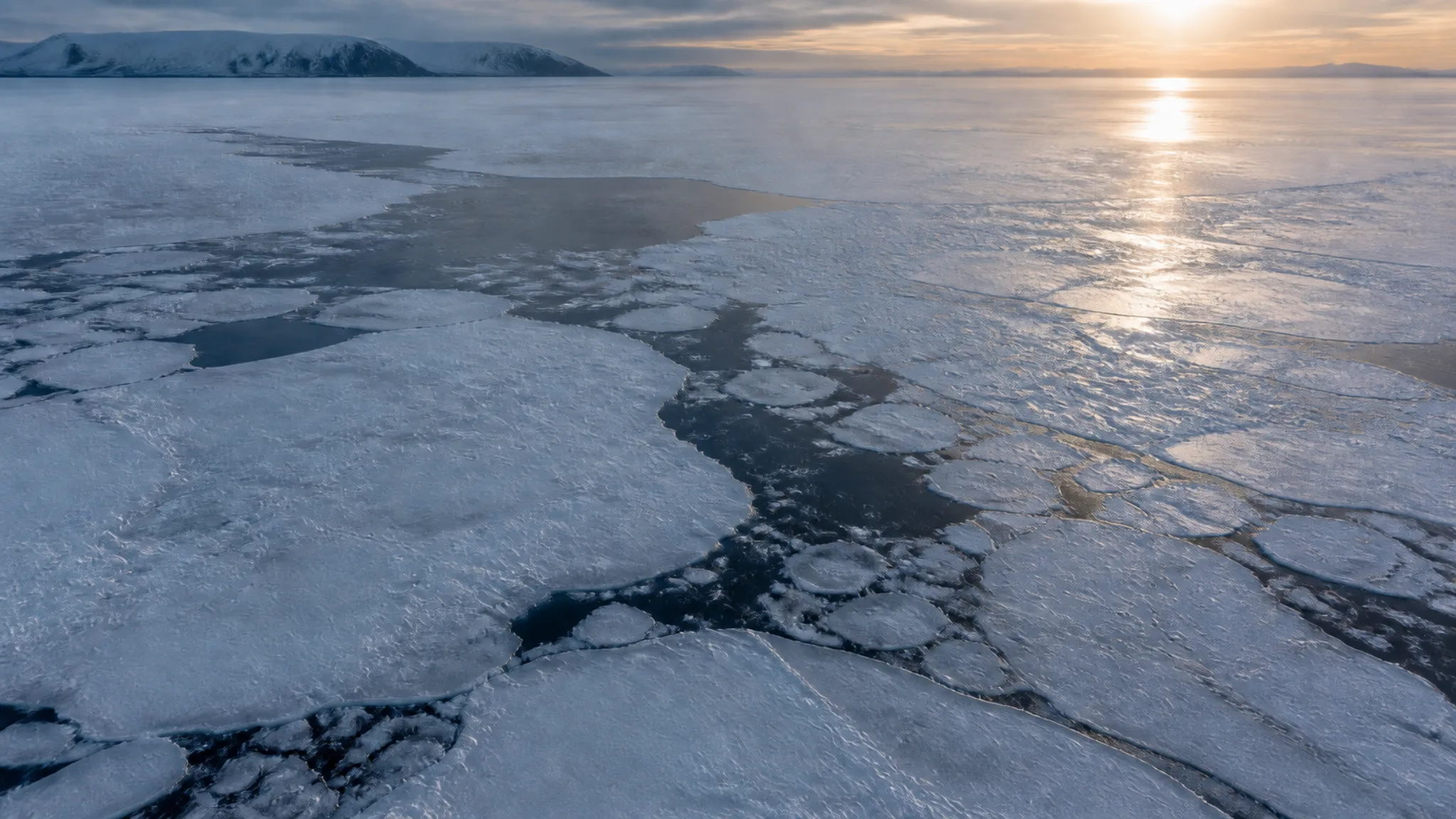
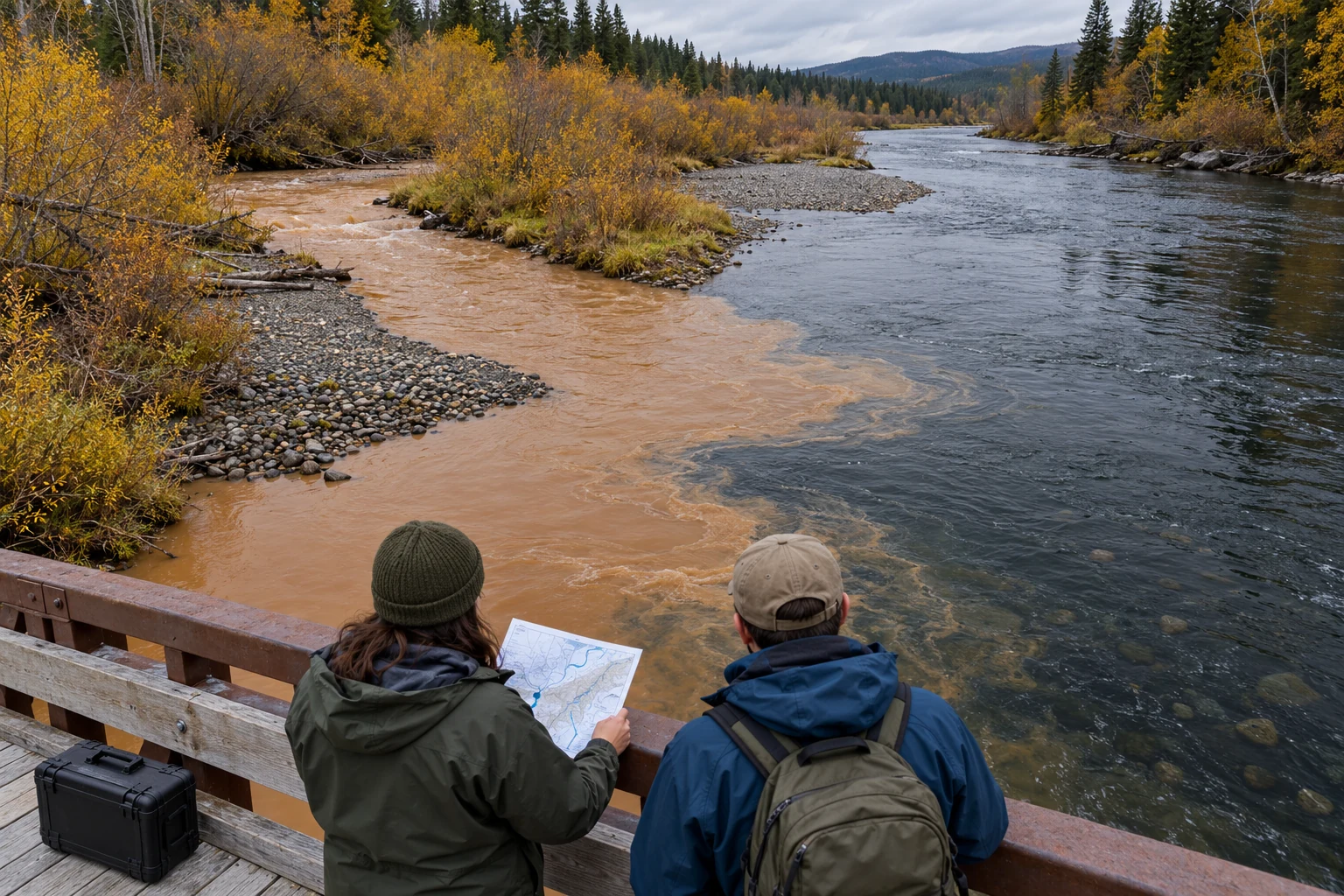

An orange Arctic stream is immediately visible, but color is the beginning of a question. This illustrative field note explains how thaw, mineral exposure, water pathways, and chemistry may connect. It does not describe a Still North survey or diagnose a real stream from an image.
Color is a clue, not chemistry.
Following the water pathway
Permafrost limits and redirects water through a catchment. As ground thaws, water may reach minerals that were previously frozen or isolated. Weathering and oxidation can change acidity and mobilize metals. The outcome depends on geology, oxygen, flow paths, season, and prior conditions. A visually similar stream elsewhere may have a different cause and consequence.
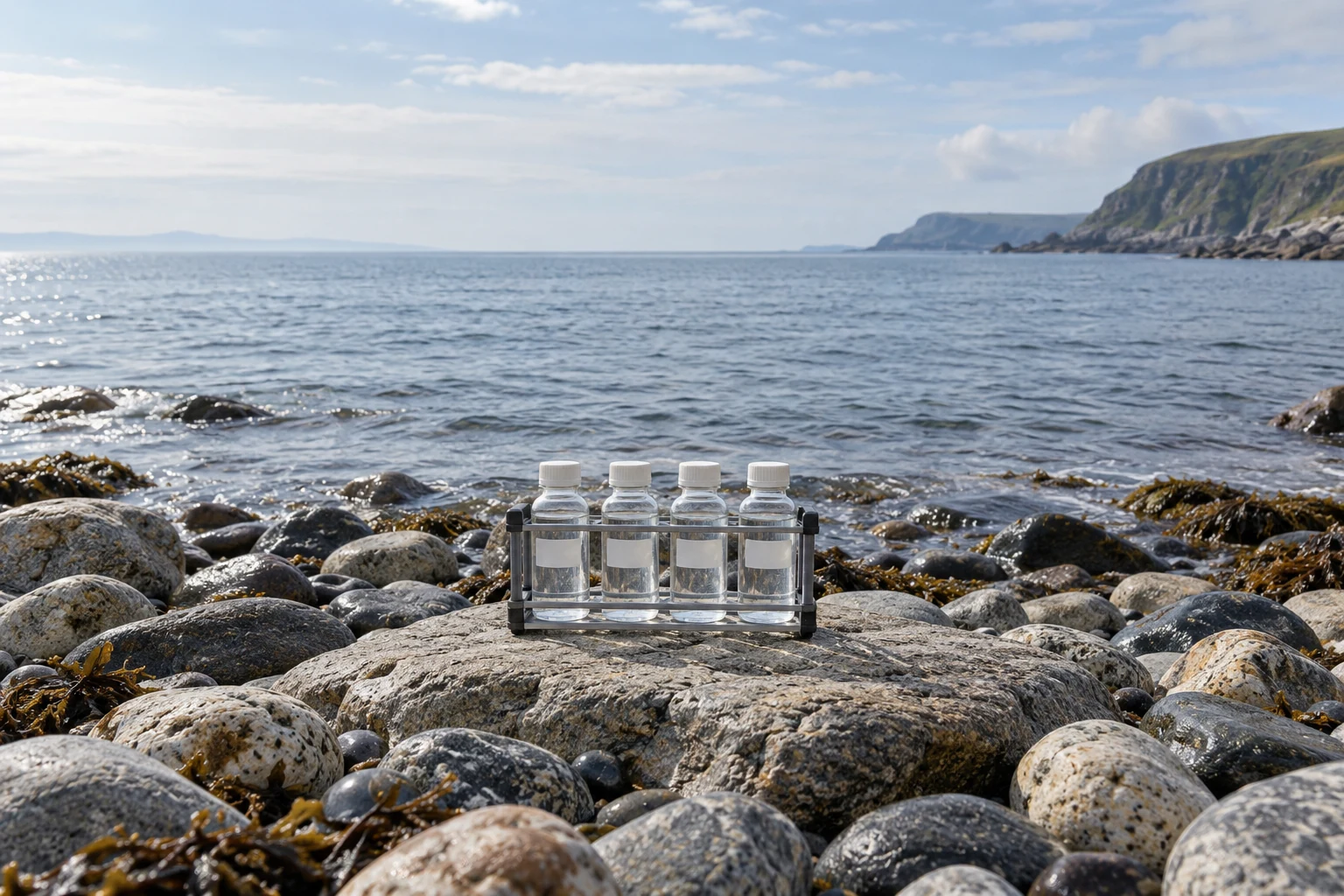
A field plan begins upstream of the striking reach. It identifies catchment context, potential source areas, tributaries, prior records, and safe access. Paired sites and repeated dates can help distinguish a local source, a high-flow pulse, and a shift that persists. One bottle taken where the color is strongest cannot represent the whole system.
What goes beside a sample
- Date, time, position, flow condition, weather, and recent precipitation.
- Container, filter, preservation, blank, duplicate, and chain-of-custody details.
- Temperature, conductivity, pH, dissolved oxygen, and laboratory analytes with units.
- Detection limits, calibration, quality flags, and any method change.
- Upstream, downstream, seasonal, or historical comparison appropriate to the question.
Metals and acidity matter because they may affect drinking-water use, fish habitat, invertebrates, and food webs. Those effects need direct measurements and local context. A chemical concentration alone does not establish biological harm, and a photograph alone cannot establish concentration. The chain of evidence should remain visible.
A pattern across watersheds
The NOAA Arctic Report Card 2025 Rusting Rivers chapter reports more than 200 documented affected watersheds. The count shows that observations extend beyond one site. It is not a complete census, and it does not mean every affected watershed shares the same geology, timing, chemistry, or ecological response.
The chapter connects permafrost thaw and mineral exposure with observed changes while explaining the need for wider monitoring. That distinction matters. A regional mechanism can guide sampling without determining the answer at a specific stream. Local measurements, community priorities, and repeated records remain essential.
Monitoring limits are evidence too
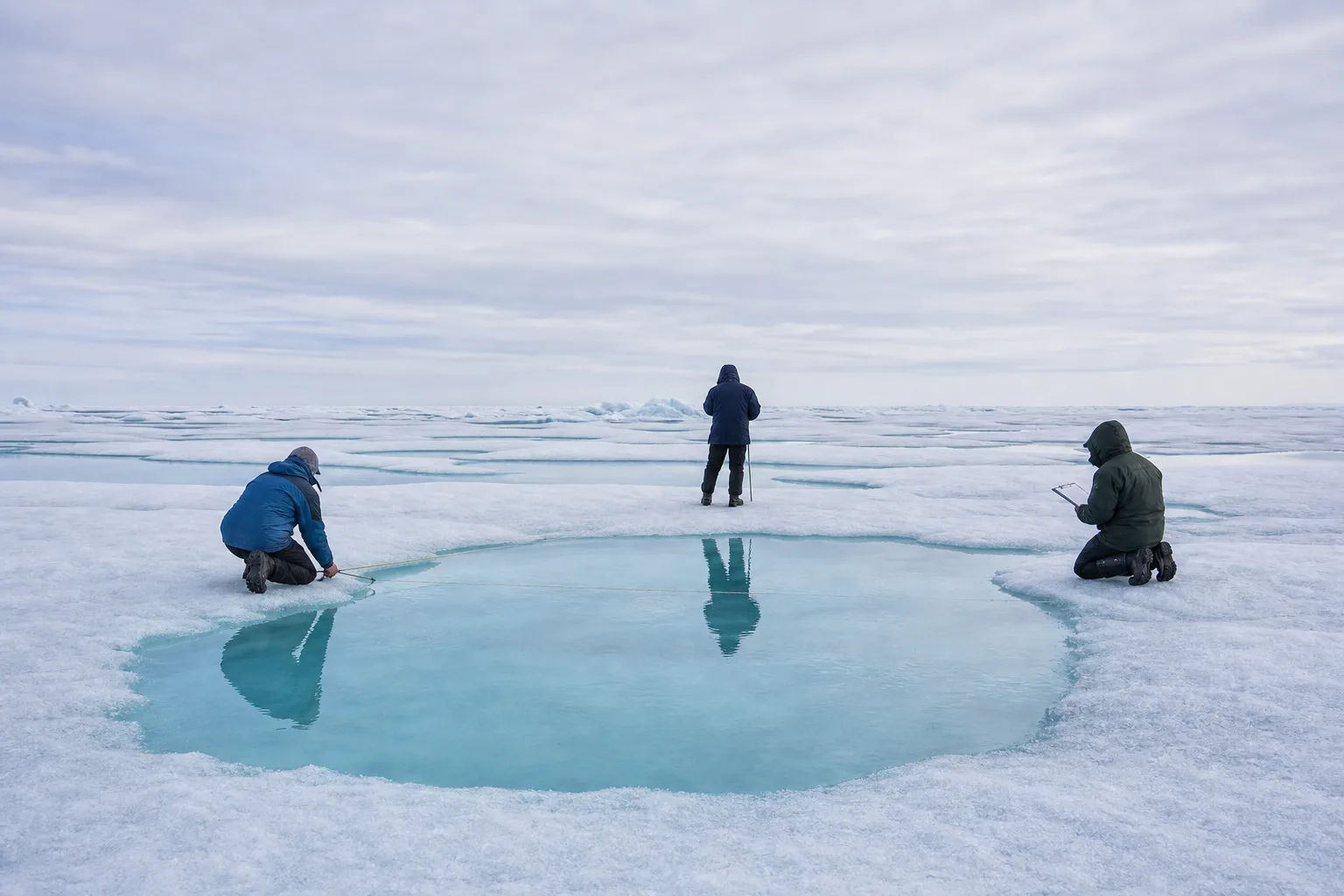
Remote watersheds are difficult to sample across seasons. Ice, high flow, weather, travel, instrument damage, laboratory access, and funding create gaps. A missing month should be marked as missing rather than interpolated without explanation. Method changes should be versioned, and overlapping measurements can show whether two methods are comparable.
People who use and know a watershed may identify changes, priorities, and locations that a short external visit would miss. Governance determines what is collected, how results are shared, and whether sensitive knowledge or locations enter a public archive. Technical openness does not overrule those decisions.
A cautious conclusion
The visible shift deserves attention because it can point toward consequential chemical change. The next responsible step is not a universal label. It is a governed sampling design, quality-controlled chemistry, ecological and community context, and enough time to understand persistence. That approach is slower than a dramatic caption and far more useful.
Comparisons need a baseline
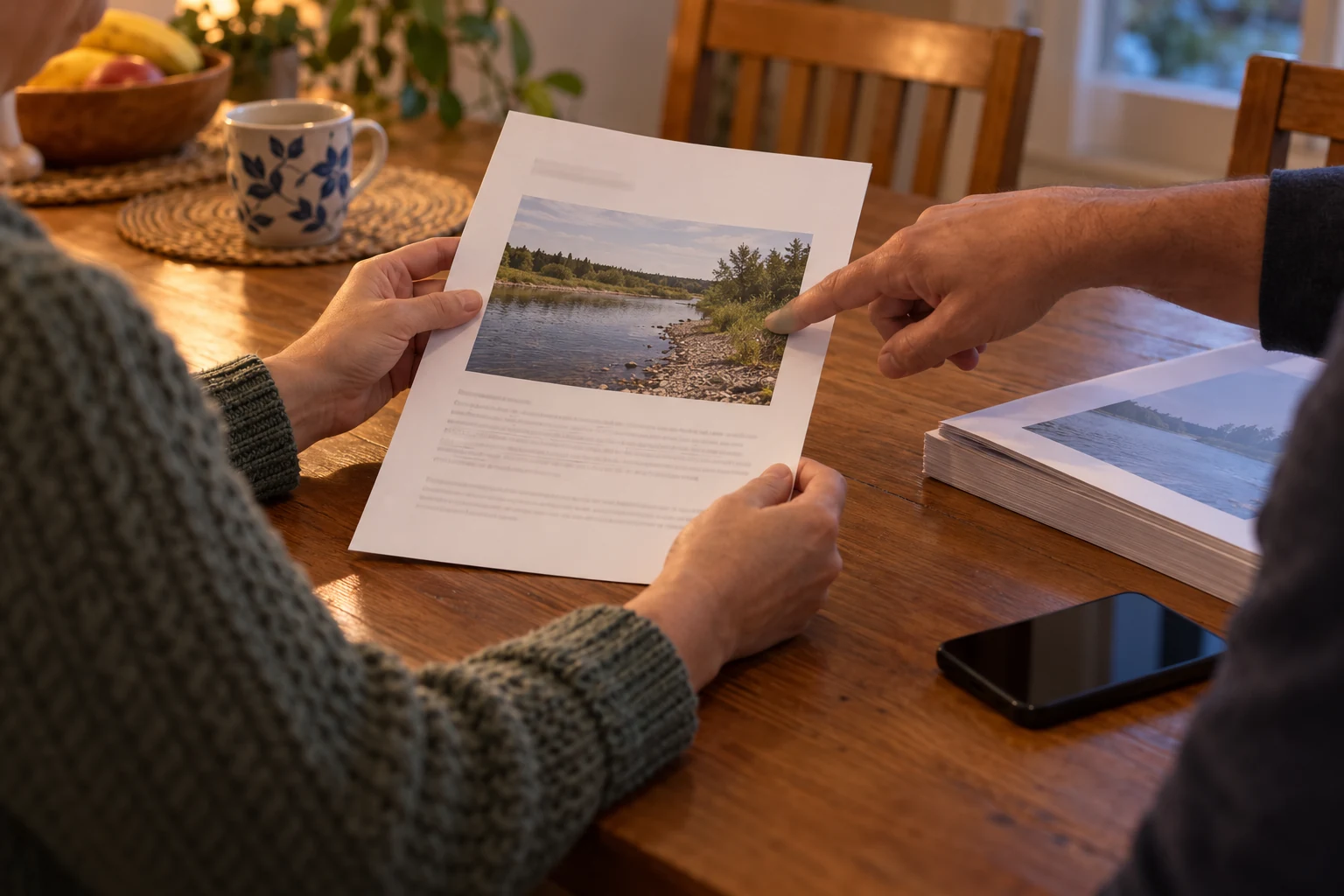
A prior clear-water photograph can establish that appearance changed, but not when chemistry shifted or which analyte changed first. Historical laboratory results, if methods and detection limits are known, can provide stronger comparison. Sediment records, discharge, weather, and mapped geology may extend context. Each source answers a different part of the sequence.
Sampling only after a public report creates another bias. The earliest phase may be missed, while sites that remain visually ordinary receive less attention. A network designed around catchment questions can include affected and comparison watersheds, repeated seasons, and transparent criteria for adding sites. That design is harder to build but more useful than a collection of striking images.
Communication should avoid the word safe unless the relevant authority and measurements support it for a defined use. Drinking, fishing, habitat, and contact can require different standards and evidence. Rapid public updates can state what is known, what has been tested, and when the next result is expected without filling uncertainty with reassurance.
A clear result names the next observation needed to test its interpretation. Repeated sampling then shows whether colour, chemistry, and flow shift together across seasons.

Leave a Reply