A comfortable home should not depend on wasting heat. Before replacing a whole system, look for ordinary losses, maintenance needs, and controls that do not match how rooms are used. Renters and owners have different authority, and a small draught fix does not remove a landlord’s or government’s responsibility for sound buildings.
How can I waste less heat at home?
Start with comfort and safety
Cold spots, condensation, noise, and air movement can help locate a problem, but they are not a complete building survey. Ventilation is necessary for moisture and indoor air quality. Blocking intended vents or combustion-air routes can be dangerous. When heating equipment, damp, wiring, gas, or structural work is involved, use qualified advice appropriate to the building and location.
A simple first checklist
- Check that heating controls show the intended schedule and room setting.
- Move furniture or curtains that block radiators and safe air circulation.
- Look for a failed seal around an opening rather than covering a designed vent.
- Bleed or service a system only where the manufacturer and tenancy allow it.
- Record condensation, damp, unusual smells, or equipment faults for prompt repair.
- Ask the owner or manager for a dated plan when the building fabric needs work.
Draught proofing with boundaries
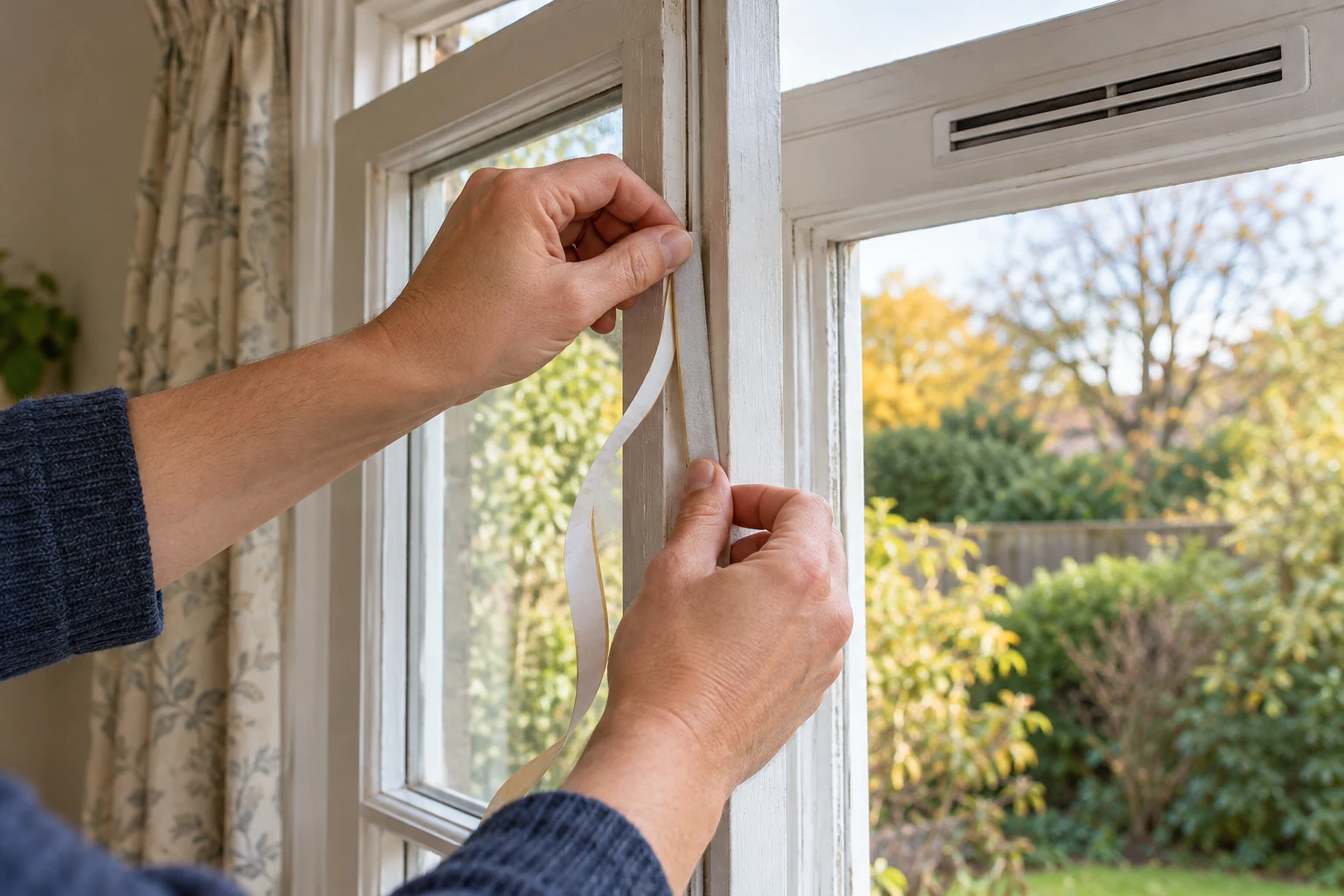
Replaceable weather strip can improve a poorly sealing window or door when the product suits the frame and does not interfere with operation, drainage, fire safety, or ventilation. Clean the surface, test a small section, and check that locks still engage. A renter can document the fault and ask permission rather than taking on responsibility for a failing frame.
Curtains, blinds, and door barriers may improve comfort in some rooms, but keep them clear of heaters and exits. A rug can make a floor feel warmer without fixing insulation. These measures can be worthwhile and still remain temporary. Naming that distinction helps prevent a quick household step from becoming the excuse for delaying a necessary upgrade.
Settings should remain sensible
Heating only the time and rooms needed can reduce waste, but health, age, disability, building condition, and occupancy shape safe settings. There is no responsible universal number for every home. A steady lower setting may work better than large swings in one building and worse in another. Use official local health and equipment guidance rather than an arbitrary target.
Insulation and maintenance
Larger work may include roof, wall, floor, pipe, or hot-water insulation, improved windows, controls, or a different heating system. Sequence matters. An upgrade should consider moisture, ventilation, electrical capacity, existing fabric, and how people use the home. A whole-building assessment can avoid solving one loss while creating another problem.
Routine maintenance protects efficiency and safety. Filters, seals, controls, pumps, radiators, ducts, and appliances have different service needs. Keep model information and records, and do not open equipment beyond your competence. Repair access, spare parts, and clear responsibility should be part of procurement, not discovered after a fault.
Renters still have routes
Document the location, date, temperature or weather context where useful, photographs, and effect on comfort. Report the fault through the formal route and keep the response. Ask for inspection, a timetable, and safe temporary support. A tenant group, advice service, regulator, or public representative may help when a repeated building problem is being treated as an individual inconvenience.
Connect the home to policy
The IPCC AR6 Working Group III Chapter 5 places household choices within buildings, services, infrastructure, and social conditions. Better standards, finance, skilled installers, renter protections, and public programs determine which upgrades are available. Keeping heat begins at a window seal and continues into those shared decisions.
Choose one safe check today and one structural request for the person or institution with authority. Comfort, indoor air, affordability, and energy should be considered together rather than traded away in a slogan.
Measure enough to learn
A simple room thermometer or energy display can help compare a change when used consistently, but readings need location and context. Place, sunlight, occupancy, weather, and appliance behavior affect interpretation. Do not turn one day into a savings claim. Look for comfort and a repeatable pattern across comparable conditions.
If bills are difficult to manage, seek trusted local energy and financial support early. Efficiency advice should not normalize an unsafe home or require someone to tolerate cold. Affordability, building quality, public support, and supplier practice are part of the same problem.

Leave a Reply